How Social Media Platforms Detect Duplicate Content

In brief
Duplicate detection stacks several signals: perceptual image hashes (pHash/PDQ), video and audio fingerprints (TMK+PDQF, Content ID) and file metadata. Each upload is reduced to a fingerprint and matched against a large index of known content. A close match (not an exact one) is enough to mark it as a repost, which is why re-saving or lightly editing a file does not reset detection.
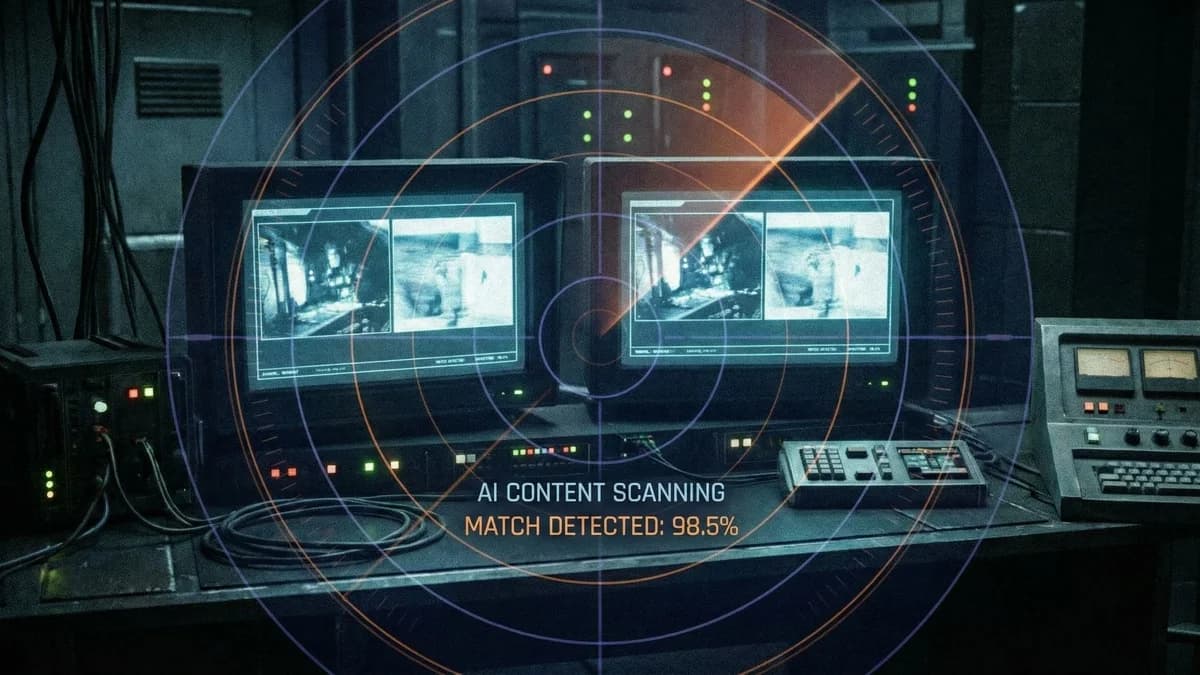
Every photo or video you upload to social media passes through an invisible gauntlet of detection systems before anyone ever sees it. These systems compare your content against billions of known files to determine whether it is original or a copy.
Platforms do not rely on a single technology. They stack three distinct detection layers, each covering a different dimension of the content. You need to defeat all three simultaneously.
Understanding how they work is the first step to understanding why most bypass methods fail, and what actually works.
Layer 1: Metadata Analysis, the First Thing Platforms Read
Before a platform even looks at what your image contains, it reads the file's metadata. Every photo taken with a smartphone embeds dozens of hidden data fields in the file itself (this is called EXIF data). It includes the camera model (e.g., "iPhone 15 Pro Max"), a unique lens identifier, GPS coordinates of where the photo was taken, the exact timestamp down to the second, the software used to process it, color space information, and compression settings.
Video files carry similar metadata in their container format (MP4 headers, QuickTime atoms): the recording device, encoder version, frame rate, audio codec, and creation date.
How platforms use it
When you upload a file, the platform reads all of this metadata before stripping most of it from the publicly visible version. The metadata serves as a fast authenticity signal. A file with complete, consistent EXIF data from a recent iPhone model, taken two minutes ago at a plausible GPS location, is almost certainly original content. A file with no metadata at all, or metadata that says "Adobe Photoshop" with no camera information, signals that it was downloaded from the internet, edited, or captured via screenshot.
Platforms also use metadata for upload fingerprinting. If the same device identifier uploads the same file hash multiple times, or if a file's metadata exactly matches another upload from a different account, this raises a flag. Instagram, for example, logs device and software signatures as part of its upload pipeline.
What it catches and what it misses
Metadata analysis catches naive reposts: people who download a photo and re-upload it without any changes. The missing or inconsistent metadata immediately marks the file as suspicious. However, metadata alone cannot determine whether the visual content of the file is a copy. Two completely different photos taken on the same phone model will have similar metadata, while an identical photo with spoofed metadata will look original. That is why platforms need the next layer.
Layer 2: Perceptual Hashing, Fingerprinting the Pixels
Perceptual hashing is the workhorse of duplicate detection at scale. Unlike a cryptographic hash (like SHA-256), where changing a single bit produces a completely different output, a perceptual hash is designed to produce similar outputs for visually similar images. This means that cropping, compressing, or slightly editing a photo will not change its perceptual hash enough to escape detection.
How perceptual hashing works
There are several variants, but they all follow a similar process. Consider pHash (perceptual hash), the most widely used:
- Resize: The image is scaled down to a tiny resolution, typically 32x32 pixels. This eliminates fine detail and normalizes the dimensions.
- Convert to grayscale: Color information is removed, since the hash should be invariant to color shifts and filters.
- Apply DCT (Discrete Cosine Transform): A frequency transform is applied, similar to what JPEG compression uses. This extracts the dominant visual structures.
- Extract low-frequency components: Only the top-left 8x8 block of DCT coefficients is kept, representing the image's core visual structure.
- Generate binary hash: Each coefficient is compared against the average value: above average = 1, below = 0. This produces a 64-bit binary fingerprint.
Other variants like dHash (difference hash) compute pixel-to-pixel gradients, and aHash (average hash) simply compares pixel brightness to the mean. All of them produce compact fingerprints that can be compared in microseconds using Hamming distance.
Why it survives common edits
Because perceptual hashing operates on low-frequency, grayscale, downscaled representations, it is inherently robust against many common transformations:
- Compression: JPEG re-encoding at different quality levels barely affects the low-frequency structure.
- Cropping: Moderate crops still preserve most of the visual layout. The hash changes but typically remains within the matching threshold.
- Filters and color adjustments: Brightness, contrast, saturation, and Instagram-style filters operate primarily on color and luminance levels, which are stripped out during the grayscale conversion step.
- Resolution changes: The image is always resized to 32x32 anyway, so uploading at a different resolution has minimal impact.
Limitations
Perceptual hashing struggles with geometric transforms: significant rotation, perspective shifts, or heavy cropping that removes major structural elements can push the hash beyond the matching threshold. It also cannot handle semantic understanding: two photos of the same scene from different angles will produce different hashes, even though a human would recognize them as depicting the same subject. This is where the third layer comes in.
Layer 3: AI-Based Copy Detection, Deep Learning That Sees Meaning
The most powerful detection layer is also the most recent. Major platforms now deploy deep neural networks specifically trained to identify copies, regardless of what surface-level edits have been applied. These models do not look at pixels or hashes. They understand the visual meaning of an image.
Meta's SSCD (Self-Supervised Copy Detection)
Meta (Facebook/Instagram) developed SSCD, a model built on a ResNet50 backbone. It was trained using a self-supervised approach on millions of images to learn which visual features remain constant across copies and which change between unrelated images. For every image it processes, SSCD produces a 512-dimensional embedding vector, a numerical representation of the image's visual identity.
Two images are compared by computing the cosine similarity between their embedding vectors. Meta's research shows that a cosine similarity above 0.75 achieves 90% precision on their DISC2021 benchmark, meaning that at this threshold, 9 out of 10 flagged pairs are genuine copies. In production at Facebook's scale (billions of images), platforms operate at even higher thresholds for precision, accepting some false negatives to avoid false positives.
What makes SSCD so effective is its invariance. The model was specifically trained to produce nearly identical embeddings for images that have been cropped, filtered, overlaid with text, re-encoded, mirrored, screenshot-captured, or had borders added. All of the "tricks" that might fool perceptual hashing are irrelevant to SSCD because it learned to look past surface modifications to the underlying visual content.
TikTok's detection system
TikTok uses a multi-layer deep learning pipeline that operates at an 85% similarity threshold. Their system analyzes both visual and temporal features in videos, making it robust against re-encoding, speed changes, and frame reordering. TikTok has publicly stated that they use "multiple layers of detection" including both traditional fingerprinting and AI-based analysis.
YouTube Content ID
YouTube's Content ID is the oldest and most established system, maintaining a reference database provided by rights holders. It fingerprints both audio and video tracks independently, comparing uploads against over 100 million reference files. Content ID catches re-uploads even when the video has been re-encoded, cropped, sped up, or had audio overlaid, because it uses both perceptual and AI-based matching on separate audio and video channels.
TMK+PDQF for video
For video content, Meta developed TMK+PDQF (Temporal Match Kernel + PDQ Features), which extends copy detection to the temporal dimension. It generates fingerprints from video frame sequences that survive re-encoding, frame rate conversion, and partial clips. At Facebook's scale, this system generates roughly 20,000 false positives per day (a tiny fraction of billions of daily uploads), which demonstrates the extreme precision required to operate at this level.
Why Each Layer Alone Is Not Enough
Each detection layer has a blind spot that the others cover:
- Metadata analysis catches files with missing or inconsistent device signatures, but cannot compare visual content. A file with perfect spoofed metadata but identical pixels will pass metadata checks while failing hash and AI checks.
- Perceptual hashing catches pixel-level similarity at massive scale, but breaks under geometric transforms and heavy edits. It also cannot understand that a filtered, cropped, overlaid version is the same image.
- AI copy detection catches semantic similarity regardless of visual edits, but is computationally expensive. Platforms cannot run it on every single upload with every reference image, so they use metadata and hashing as fast pre-filters to narrow down the candidates that need AI analysis.
This layered architecture means that bypassing one layer is not enough. If you spoof metadata but leave the pixels unchanged, hashing catches you. If you edit the pixels enough to fool hashing but keep the visual meaning intact, AI detection catches you. If you somehow change the visual meaning enough to fool AI but leave the metadata raw, the platform flags the upload as suspicious from the start.
How MetaGhost Defeats All Three Layers Simultaneously
MetaGhost is the only tool designed to address every detection layer in a single, automated process. It applies three coordinated modifications:
- Authentic metadata injection: Replaces the file's metadata with complete, realistic device signatures from real camera models. GPS coordinates, timestamps, device identifiers, and software fields all match authentic capture patterns. To the platform, the file appears to have been freshly taken on a real smartphone.
- Pixel-level fingerprint modification: Alters compression parameters, color values, and pixel data in ways that break perceptual hash matching while remaining completely invisible to the human eye. The processed file's pHash, dHash, and aHash bear no resemblance to the original.
- Adversarial AI perturbation: Applies mathematically optimized, sub-pixel perturbations crafted through gradient-based optimization against the same AI models platforms use. These perturbations push the image's 512-dimensional embedding far from the original in the detection model's feature space, so that SSCD and similar systems see the processed image as entirely unrelated content, even though it looks identical to any human viewer.
This three-layer approach is not optional; it is necessary. Each layer of detection requires its own counter-measure, and MetaGhost handles all three automatically, for both photos and videos, across every major platform.
Ready to make your content undetectable across every platform? Get started with MetaGhost and defeat all three detection layers in a single step.
Frequently Asked Questions
What is a perceptual hash?
A perceptual hash is a short signature derived from the visual structure of an image or video frame. Unlike a cryptographic hash it changes only slightly when the content changes slightly, so visually similar files produce similar hashes and can be matched.
How is duplicate detection different from a copyright strike?
Duplicate detection compares media fingerprints to identify repeated or near-identical uploads for distribution and spam checks. A Content ID claim matches a rights-holder reference and can affect monetization or availability. On YouTube, a copyright strike follows a valid removal request. These are distinct processes.
Does compression or a screenshot defeat these systems?
Usually not. Perceptual and audio fingerprints are built to survive recompression, resizing and screenshots. Those transforms shift the fingerprint only marginally, often still inside the match threshold.
Help us improve
Did this guide solve your problem?
Ready to create your next repost?
Try MetaGhost and make every repost unique and undetectable.
Discover MetaGhostRelated Articles
How Platforms Detect AI-Generated Content in 2026
Platforms flag AI content through C2PA metadata, IPTC tags, and EXIF markers. Learn what triggers the Made with AI label and how to remove it from your photos and videos.
How Instagram's Content Matching Algorithm Works
Inside Instagram's detection: SSCD copy detection, Rights Manager, perceptual hashing, and how each layer decides if your content gets seen or suppressed.
EXIF Data & Metadata: What Your Photos Tell Social Media
What EXIF data reveals about your photos, how platforms use it to detect reposts and fakes, and why removing metadata often flags your uploads as suspicious.
What Is Content ID and How Does It Work?
How YouTube Content ID fingerprints audio and video, what happens on a match, how Rights Manager compares, and how adversarial AI bypasses these systems.
What Is Perceptual Hashing and How Platforms Use It
How perceptual hashing (pHash, dHash, aHash) works, why it survives crops and filters, and how Meta's SSCD goes beyond traditional hashing.
How to Run 20 Instagram Accounts Without One Link Banning Them All (2026/2027 Guide)
Here is how the mechanism works, why it takes down accounts in groups, and the setup that keeps them separate.