My Post Was Removed for Copyright: What to Do

In brief
If a post was removed for copyright, it usually matched a rights holder's reference via an automated system like Content ID or Rights Manager. Your options are to file a counter-notice if you hold the rights, replace the flagged audio or video, or re-upload a version modified enough that the fingerprint no longer matches, and only repost content you are allowed to use.
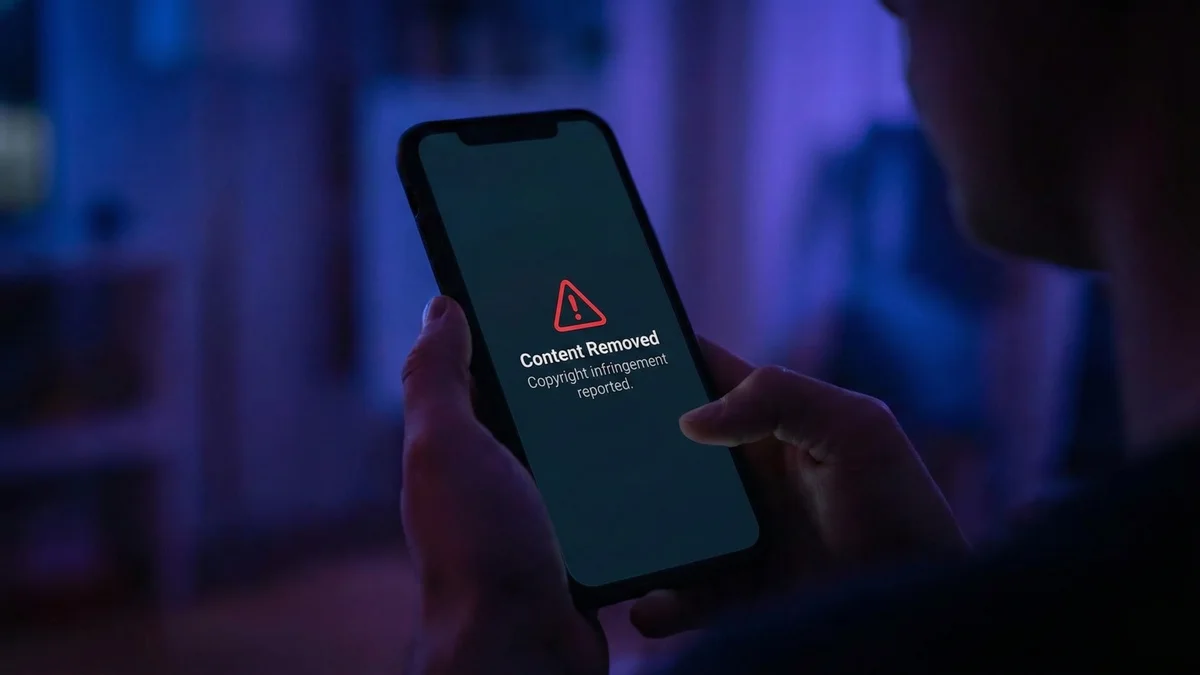
You wake up to a notification: your post has been removed for violating copyright. Maybe it was a video with background music, a meme you shared, or a clip from a stream.
Whatever the content, the result is the same: your post is gone, your reach may have taken a hit, and you are left wondering what happened and what you can do about it.
Copyright removals are one of the most frustrating experiences on social media. In most cases, the entire process is automated: no human ever reviewed your content before it was taken down.
This guide walks through why it happens, how the systems behind it work (including tools like Content ID), what your options are, and how to prevent it from happening again.
Why Your Post Was Removed
Social media platforms are legally required to respond to copyright claims under laws like the DMCA (Digital Millennium Copyright Act) in the United States and the EU Copyright Directive in Europe.
When a rights holder (or their automated system) identifies content that matches their copyrighted material, the platform must act. This usually means removing the content immediately and notifying you after the fact.
How Content ID and Rights Manager Work
YouTube Content ID
YouTube operates the most well-known system, called Content ID. Rights holders upload reference files (audio tracks, video clips, entire movies) into a database. Every video uploaded to YouTube is scanned against this database.
If a match is found, the rights holder can choose to block the video, mute the audio, monetize it with ads, or track its viewership. Content ID matches audio waveforms and visual fingerprints, making it extremely difficult to evade with simple edits like pitch shifting or cropping.
Meta Rights Manager
Facebook and Instagram use a similar system called Rights Manager. Content owners upload reference material, and Meta scans all uploads across Facebook, Instagram, and Threads. The system uses both audio fingerprinting and visual matching powered by deep learning models. When a match is detected, the rights holder can choose to block, monitor, or claim the content. Unlike YouTube, Meta also uses its SSCD (Self-Supervised Copy Detection) model, which compares learned visual embeddings rather than simple pixel patterns, making it highly resistant to traditional edits.
TikTok and Other Platforms
TikTok uses a combination of audio fingerprinting for music and AI-based visual similarity detection with an approximately 85% similarity threshold. Snapchat, Twitter/X, and LinkedIn also scan uploads but typically rely on hash-based matching and respond primarily to manual DMCA requests rather than fully automated systems.
Can You Appeal a Copyright Removal?
Yes, every platform is legally required to offer an appeal process. Here is how it generally works:
- Check the notification: The platform will tell you which content was flagged and who filed the claim. Read this carefully. Some claims are filed by automated systems and may be incorrect.
- File a counter-notification: If you believe the takedown is wrong (for example, the content is your own original work, falls under fair use, or is in the public domain), you can file a counter-notification. On YouTube, this is done through the Copyright section of YouTube Studio. On Instagram and Facebook, follow the link in the removal notification.
- Wait for the response: The claimant has a set period (typically 10-14 business days) to respond. If they do not take legal action, your content is usually restored.
- Understand the risks: Filing a counter-notification requires you to provide your personal information and a statement under penalty of perjury. If the claimant decides to pursue legal action, you could be drawn into a dispute. Only appeal if you genuinely believe the claim is incorrect.
Repeated Strikes and Account Penalties
A single copyright removal is usually not catastrophic. However, repeated strikes lead to escalating consequences:
- YouTube: Three strikes within 90 days results in channel termination.
- Instagram/Facebook: Feature restrictions (no Reels, no Live), or permanent account disabling.
- TikTok: Escalation from warnings to temporary bans to permanent removal.
Beyond outright removal, copyright flags can also trigger algorithmic suppression. Even if your content is not removed, a copyright match can reduce your distribution and effectively shadowban your account.
How to Prevent Future Copyright Takedowns
The best strategy is to avoid the match in the first place. Here are the most effective approaches:
- Use royalty-free or licensed content: Platforms like Epidemic Sound, Artlist, and the in-app music libraries on TikTok and Instagram provide tracks cleared for use. This eliminates audio-based matches entirely.
- Create original content: Obviously the safest route, but not always practical if you run a theme page, curate content, or need to reference existing material.
- Understand fair use limitations: Fair use is a legal defense, not a permission. Adding commentary does not automatically make something fair use, and platforms do not evaluate fair use before removing content. They remove first and let you appeal.
- Modify content at the detection level: This is where most people get stuck. Simple visual edits (cropping, filters, borders, speed changes) do not defeat modern AI-based detection. The visual fingerprint survives these surface-level changes. To actually prevent a match, the content needs to be modified at the same level the detection systems operate: the AI feature space. Learn more about how to bypass content detection across every layer.
How MetaGhost Prevents Copyright Matches
MetaGhost approaches the problem at every detection layer simultaneously. Rather than relying on superficial edits that modern systems see through, it applies three coordinated modifications:
- Metadata injection: Replaces the file's metadata with authentic device signatures, making it appear as if the content was freshly captured on a real device rather than downloaded and re-uploaded.
- Pixel-level modification: Alters the file's digital fingerprint through targeted changes to resolution, compression, and color values that break hash-based matching without visible quality loss.
- Adversarial AI perturbation: Applies invisible modifications specifically designed to change how AI detection models interpret the visual content. The image looks identical to the human eye, but to a copy detection model like Meta's SSCD, it appears as completely different content.
The result is a file that passes every detection layer (metadata, hashing, and AI) as if it were original content. This is not a guarantee of legal immunity, but from a technical standpoint, the platforms' automated systems will not match the file to any reference material in their databases.
If you are tired of copyright removals disrupting your workflow, try MetaGhost and take control of your content distribution.
Sources and documentation
YouTube Help
How Content ID worksReference files and the block, monetize or track options available to rights holders.
YouTube Help
Understand copyright strikesDefinitions of copyright strikes and their distinction from Content ID claims.
Frequently Asked Questions
Why was my post removed for copyright automatically?
Automated systems fingerprint your upload and match it against registered references. A match can remove or restrict the post without a human reviewing it.
Can I dispute a copyright removal?
Yes, if you own or have licensed the content you can usually file a counter-notice or dispute. False disputes carry risk, so only contest matches you have rights to.
How do I avoid the same removal on re-upload?
Replace or modify the flagged audio and video enough that the fingerprint no longer matches the reference, and confirm you have the rights to the material.
Help us improve
Did this guide solve your problem?
Ready to create your next repost?
Try MetaGhost and make every repost unique and undetectable.
Discover MetaGhostRelated Articles
How to Bypass Social Media Content Detection in 2026
A complete breakdown of every detection layer platforms use (metadata, hashing, and AI models) and the only approach that defeats all three simultaneously.
How to Repost on Instagram Without Getting Banned (2026 Guide)
Why Instagram kills reposts, how Content ID and SSCD fingerprinting detect duplicates, and 7 proven techniques to repost safely without shadowbans.
How to Repost Content Without Getting Detected in 2026
Learn how platforms detect duplicate content and how metadata modification combined with adversarial AI can make every repost unique and undetectable.
Best Tools to Make Your Content Unique in 2026
Compare metadata cleaners, video editors, re-encoding tools, and AI watermark removers vs MetaGhost. Which tools address all three detection layers?
How to Remove Metadata From Photos & Videos (2026 Guide)
Step-by-step methods to remove EXIF, IPTC, and XMP metadata from photos and videos. Plus why stripping metadata flags your uploads and what to do instead.
Top 5 Ways to Make a Video Unique for Social Media in 2026
Five methods to make a video unique ranked, from re-shooting to adversarial AI. Which approaches bypass platform detection and which waste your time.